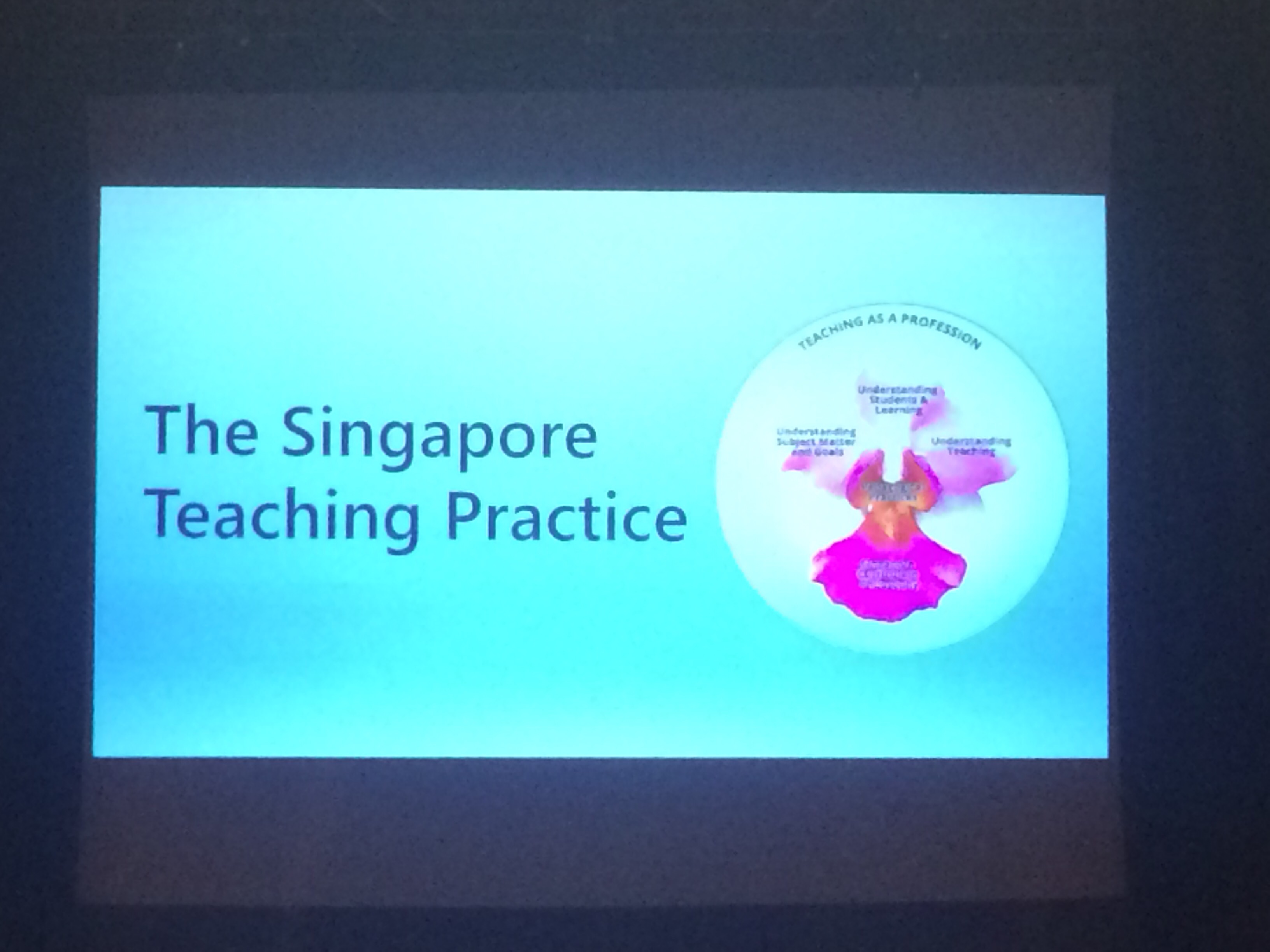
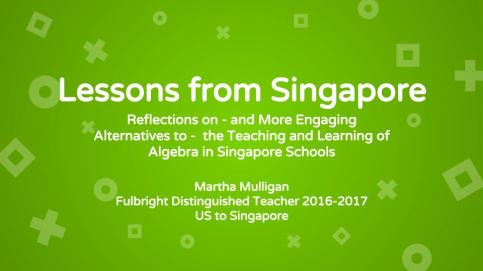
On Wednesday of this past week, I presented a workshop at the Redesigning Pedagogy International Conference, which was hosted by the National Institute of Education. It’s a large conference for Singapore (and other) teachers. I loved the grandeur of the opening ceremony, with dignitaries processing in to music. There were many paper sessions and workshops, with other Fulbrighters also representing. It also marked the launch of the Singapore Teaching Practice, which I think is akin to Chicago’s Framework for Teaching, but I’m not sure. There were not many details given about it in the intro video.
Category Archives: Fulbright Distinguished Award in Teaching Fellowship to Singapore 2016-2017
Open Minds, Mind Your Money, and Student Led Conferences
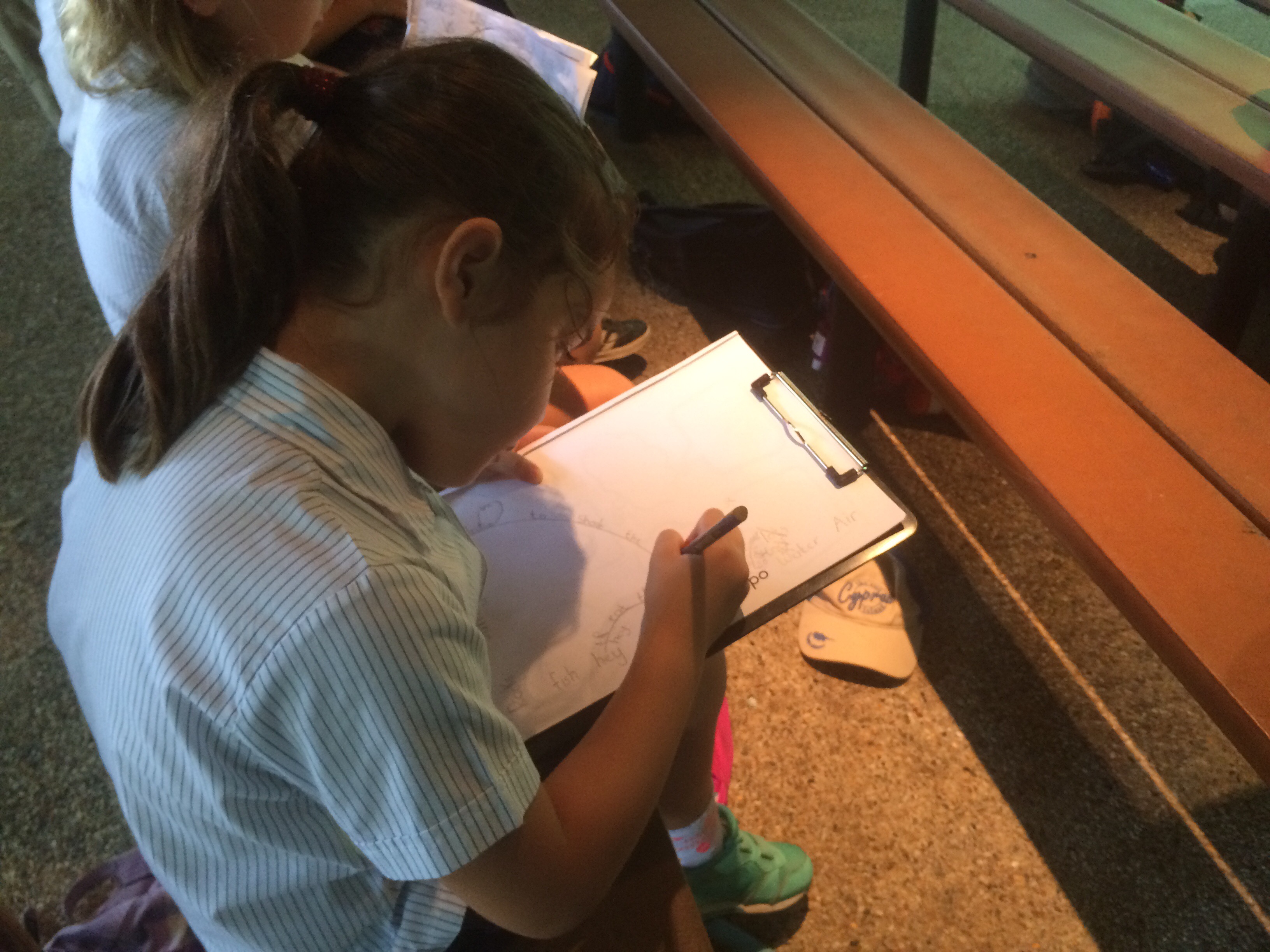
Last week I had three educational experiences in three different locations. On Monday I accompanied my daughter’s Primary 1 class on a trip to the Singapore Zoo. It wasn’t an ordinary field trip, though. It was an Open Minds trip. I started to understand the distinction when we got there and the students had clipboards and papers to record their observations. We set off in small groups to different exhibits. They were told to take notes on the animals’ environments and habitat. The students had to consider why they thought the environments were like that. In the afternoon, they had a more structured activity with the Lead Open Minds Coordinator of the school. He read them a book and a letter from someone who had questions about the habitat of the Pygmy Hippo. So, the students studied the behavior of the Pygmy Hippos and talked about its environment with the teacher, with the other students and with us chaperones. It was some impressive inquiry for seven year-olds. They stayed engaged, alternating between examining the animal and its environment, while considering developmentally appropriate questions posed by the teacher. I was so impressed with how this teacher kept 18 students focused and happy to be learning about the hippos for over an hour.


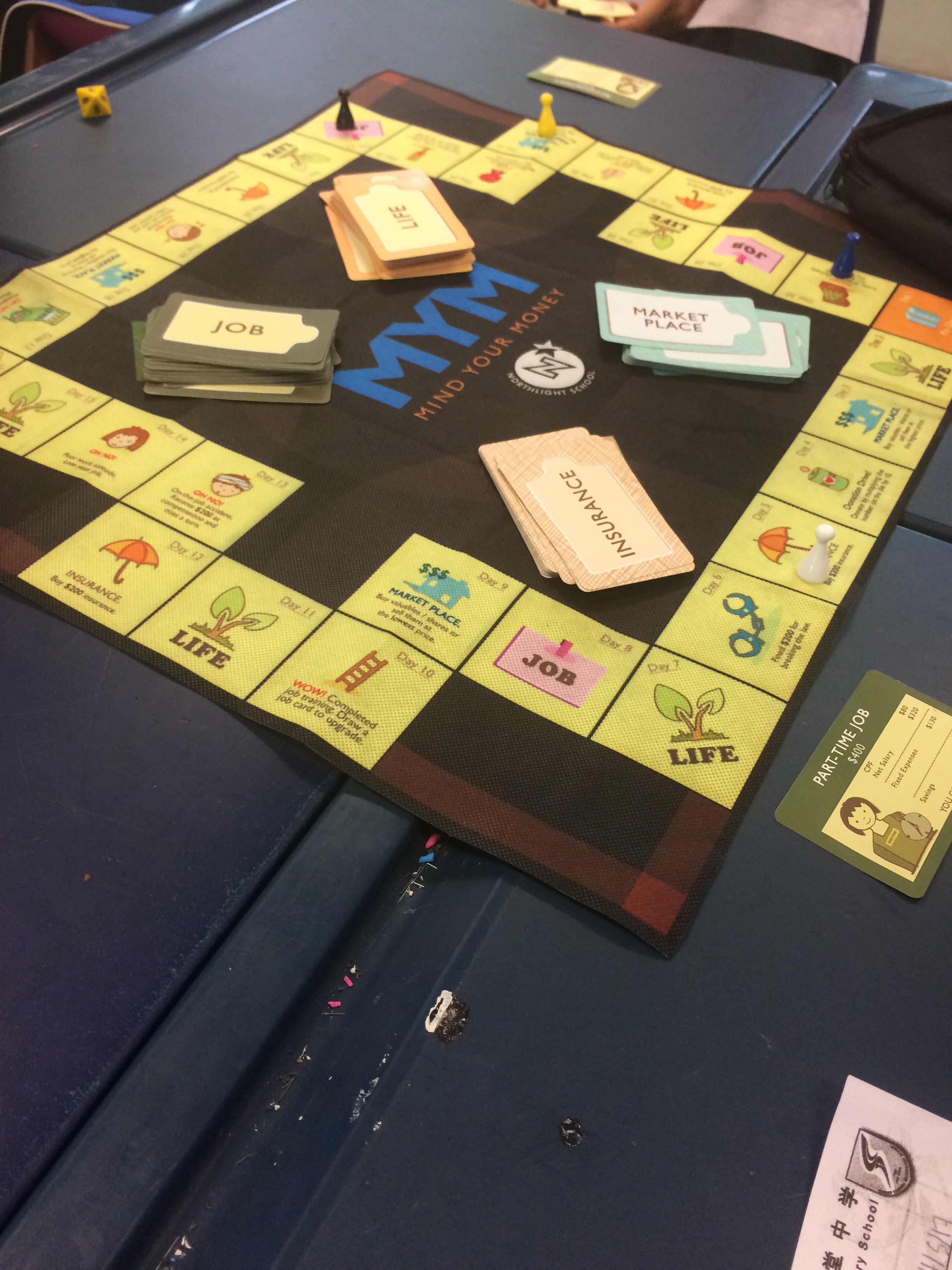
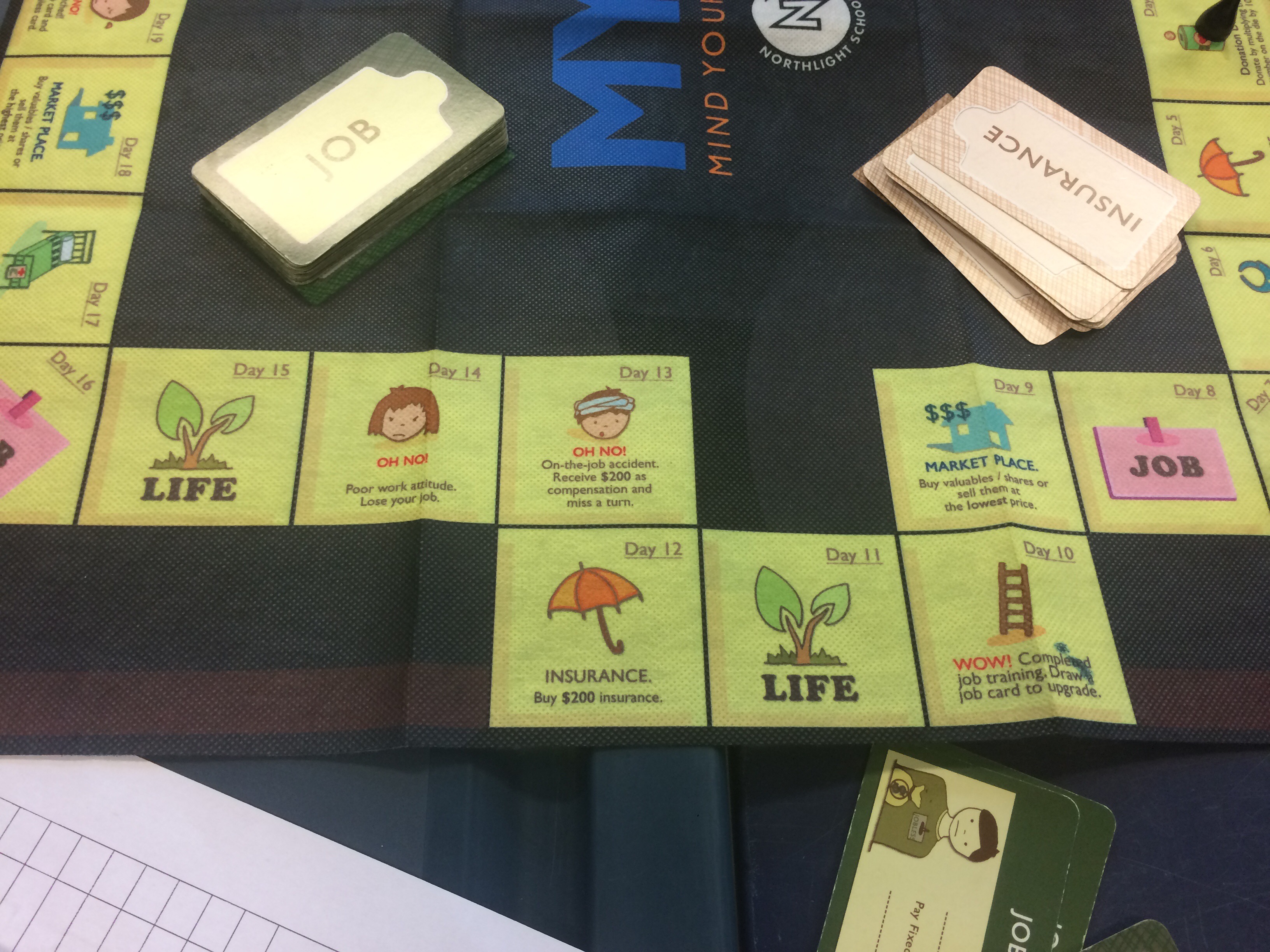
Midweek, I returned to a school to see students play a teacher-created board game Mind Your Money. It was a Singaporean-influenced version of The Game of Life or even Monopoly. Students moved their game pieces around the board, drawing cards for “job” or “market place” or “insurance” or “life” when appropriate. They play for three months – or rounds around the board – and then tallied their assets at the end of the game. All of this is part of the school’s “post-exam activities,” in which students come to school until the end of May, but have fewer traditional classroom interactions. The semester ends for most students this week, but the Sec 4 students have to return for two weeks for “intensive revision,” or review time. They take the O-levels in October and many schools start reviewing for them now.


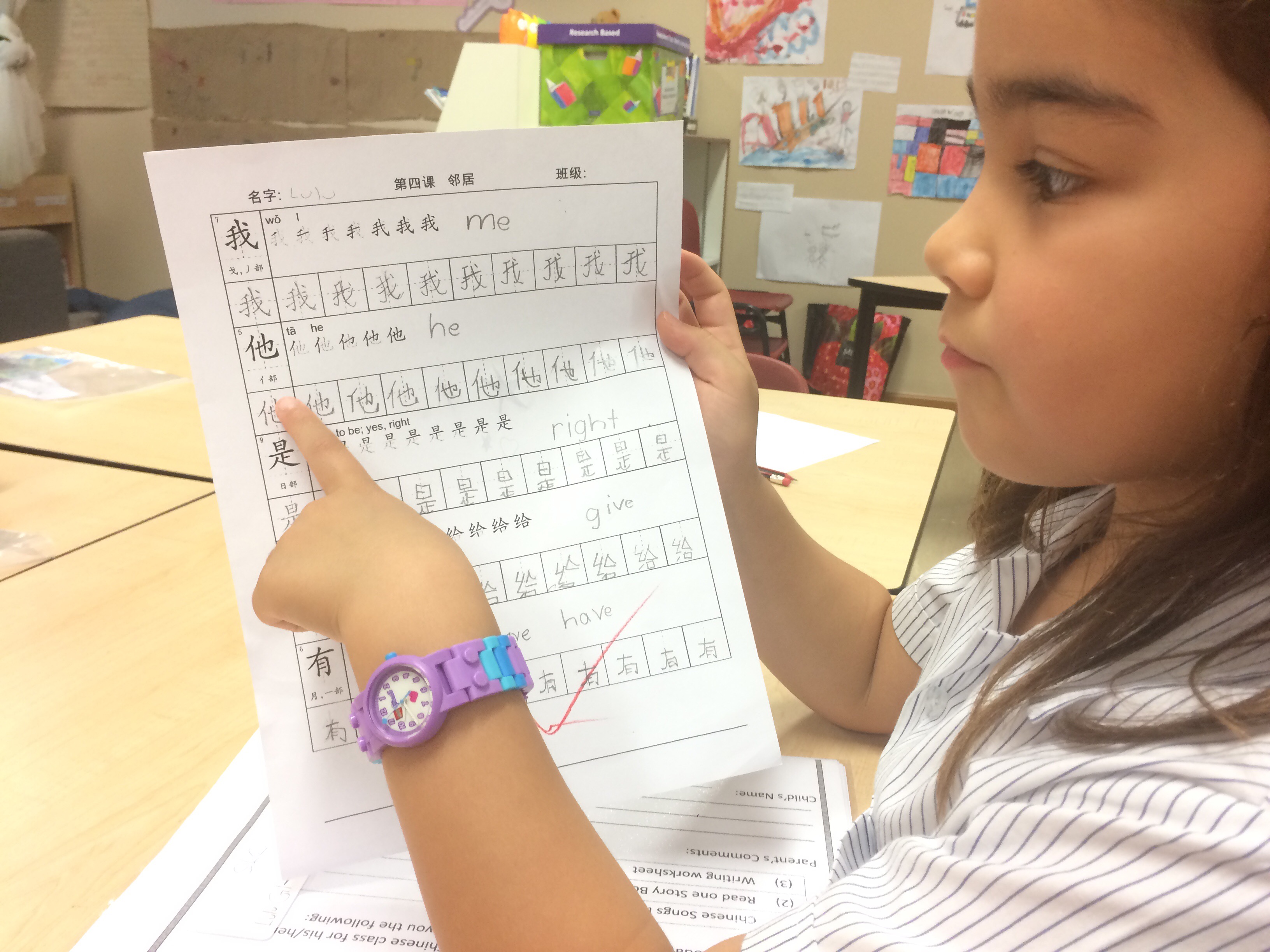
On Friday, I attended Student Led Conferences at my kids’ school. I’ve never been a part of such a thing, but I’m ready to adopt it as an educator. We spent about 30 minutes in each kids’ classroom (with two other families in each room doing their own thing, too) while *my kid* talked to us about what she has learned and has been doing all semester. Each teacher said hi to us and that was it, hanging back and letting the students do all the talking. The girls had a plan written out that had the highlights of what they were showcasing and they followed the plan. I loved it. What a way to get students to take ownership of their learning. It makes sense for students to discuss their strengths and areas of growth instead of me discussing them as their teacher. I’m going to have to look into implementing some version of this when I get back. Do I seek permission first? …or beg for forgiveness later? I ain’t too proud to beg, but I’m guessing this wouldn’t forgiveness would not be necessary.


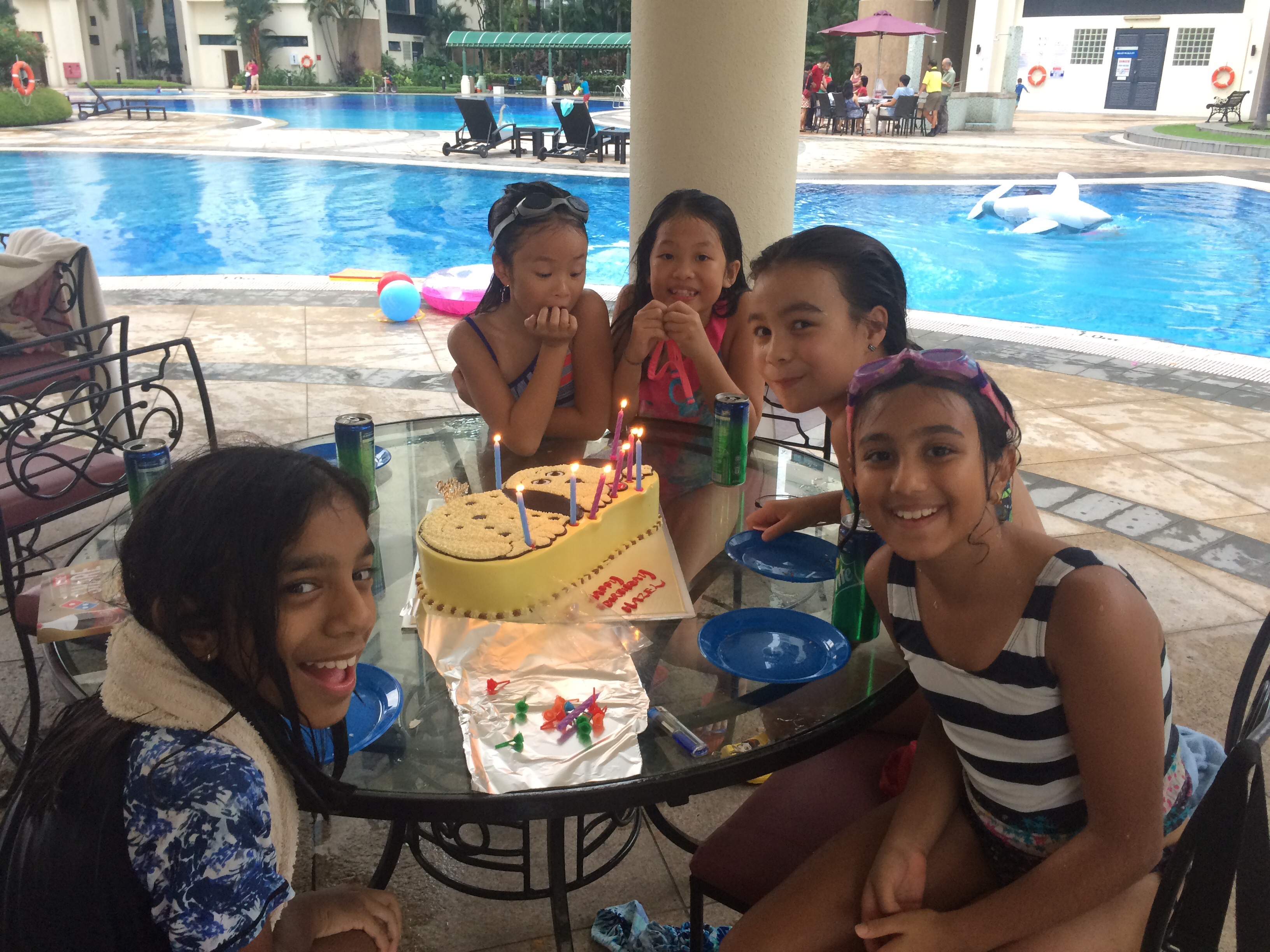
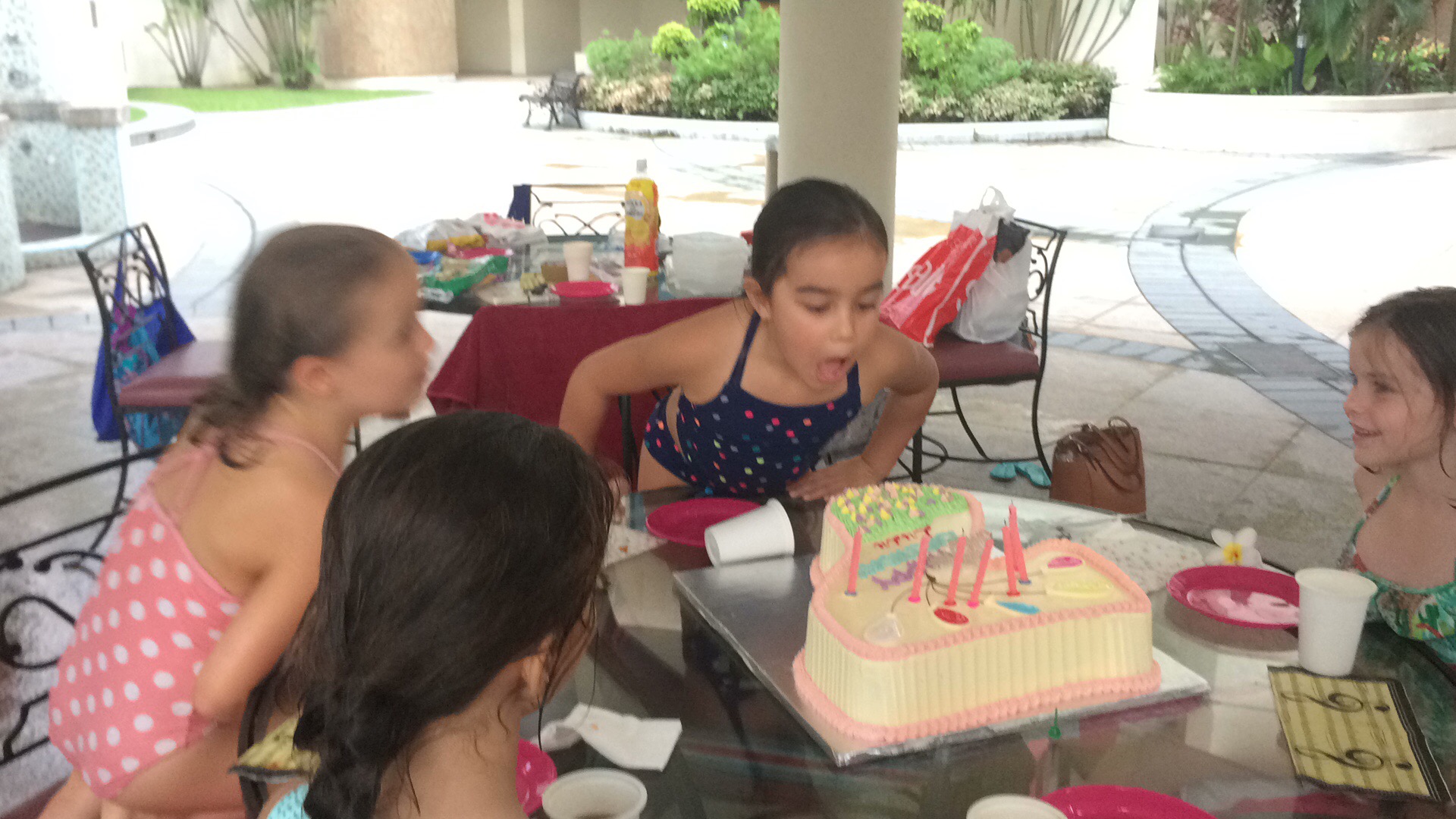
We rounded out the week with another visit to Mount Faber for Lu’s birthday dinner on Thursday, meeting friends for pizza on Friday night, double birthday pool party for both girls at our place on Saturday, a second visit to Sentosa (high ropes, zip lines, and luge course) on Sunday and then a visit to an Italian restaurant for Hazel’s birthday dinner. It was a busy weekend. Our minds were more open after each part, our “students” certainly led with their choices of eating places, but as a result, we didn’t do a good job of minding our money. I guess we have more learning to do in these next few weeks here.
Mullibora, Party of Four
We are pretty much a package deal wherever we go here. This is not a complaint, but more of a stating-the-obvious observation of our time here. We eat most of our week night dinners together at either our south dining room or our east dining room because after an informal cost-time-benefit analysis, it’s more economical to eat at a hawker center or food court than to prepare our own meals. (I did make dinner last night at home – for the first time in a long time – and it was actually nice to eat in our main dining room.) We venture out on the weekends to interesting local places. We’ve had a few meals out at proper restaurants with Fulbrighter friends and some of Johan’s friends visiting here or living here. Because we don’t have a cadre of babysitters like we do back home, Johan and I get to enjoy our evening meals with the company of our children…every. single. night. We are a four-pack.
This past week was especially adventurous because we made it to Mount Faber via a cable car on Thursday night, then to Singapore Flyer and Marina Bay Sands on Saturday to celebrate the girls’ birthdays coming up. We all enjoyed the up-high views in all three places. Mount Faber offered a lovely view of Sentosa and the cable car was an exciting travel experience from Mount Faber to Sentosa and back. The Flyer was a 30-minute Ferris Wheel ride that gave us a view of the bay. The best view, though, was from the 57th floor at Marina Bay Sands, where there is a sky-high infinity pool, among other attractions. Johan and I determined that there was at least one person taking a photo/selfie every 1-2 seconds on the pool deck. It was a pretty amazing sight – both the view and the noticing of others capturing it – and a reminder of what modern architecture can bring us: swimming thousands of feet up with hundreds of cell phones continually snapping.
The girls especially loved their time at MBS and the nearby Gardens by the Bay, which includes the Supertree Grove. After all of our swimming and selfie-ing, we didn’t have time to walk the Skyway there, so we already have a reason to go back. Satay by the Bay is a decent hawker center, too. Our course, we ate together there, too.
Hat tip to my friend Lucy who coined the Mullibora Bed and Breakfast – another name for our Chicago home which has hosted countless friends and family – back in the day when we were a party of two. We’ve latched on to that combination of our last names and now use it to refer to our collective, our crew, our unit, our squad, our quartet. Of course, I wouldn’t want it any other way.
The Five C’s
A little while ago a local Singaporean revealed to me and Johan how Singaporeans summarize the materialistic culture in which they live. We were speaking casually about our experiences here and she offered what she claims is a widely-known and concise explanation that allegedly sums up Singporeans’ material aspirations and offers a means to exhibit their wealth when they’ve *arrived.* I’ve only been here a few months, so I can’t affirm or refute her appraisal. I also won’t assume that it’s different than the materialism that runs rampant in the US either. As a teacher, I don’t really run in the circles of the wealthy, those who aspire to that kind of blatant materialism. And, I certainly have not met any Singaporeans who have these same aspirations, at least from what I can tell.
Others have written about what the five C’s are and there are probably many more emerging and different definitions as times change. These are the five C’s as they were explained to me. I write about them without judgement; I offer them here as a context for my five C’s of teaching and learning, which follows below.
Cash/Credit: Our friend had lumped these together, though other sources list them as separate. It seems obvious that wealth is associated with both cash, or what one earns of it, and credit-worthiness. The more, the better.
Car: Not many Singaporeans own a car. It’s very expensive to buy a 10-year Certificate of Entitlement, which is required before purchasing a car, so most people rely on public transportation.
Carat: This seemed to be the C that isn’t always included on other lists, but she explained that *bling* is a big deal in Singapore. Walking through any mall here and noting the number of jewelry and watch stores certainly vouches for this. I don’t think I’ve ever seen more than a few jewelry stores in a single mall in the States. Here, it seems like there a several per level of a 3 – or 4-story mall.
Condo: About 80% of Singaporeans live in HDB’s – both slang and an acronym for government housing, developed by the Housing and Development Board. The flats are not free, but the price of a new development is subsidized by the Singapore government. Private condominiums are not subsidized and, therefore, are more expensive since land is so scarce here. Only Singapore citizens and permanent residents can buy HDB’s, but foreigners and locals can buy private condos.
Club: Many ex-pats and locals belong to country clubs here. There’s the American Club for US and Canadian ex-pats. There are the British Club, Dutch Club, Raffles Town Club, the Singapore Island Country Club, just to name a few. I recently found out there’s even a Civil Service Club, for people who work in civil service, including teachers. I’ve interacted minimally with the country club culture, but I can still understand how membership in one serves as a status symbol.
After reflecting on these five C’s, I decided to assemble my five C’s of teaching and learning, using a convenient combination again to really squeeze in six.
Collaboration/Cooperation: This is a big one for me. In my classroom, group work is the default. I think about learning activities that gets students talking and requires them to rely on each other. If students are working in isolation, then I’ve failed as a teacher. I prioritize collaboration/cooperation over competition (one of the ugly C’s, in my opinion). When students value winning over collaborating, all students end up losing – losing out on rich conversations, on deeper conceptual understanding, and on a collective sense of accomplishment that comes from real collaboration.
Creativity: I choose creativity at the expense of correctness. It’s impossible to be creative when one is always worried about being correct. Ask any artist if you don’t believe me. It might be blasphemous for me to write this as a math teacher because most people associate mathematics as being right or wrong. As much as I can, I want students to do the creating while in math class. Creating might be in the form of determining a formula that fits data. It might be in the form of a question worth investigating or a problem posed to another student. It might be in the form of a beautifully rendered graph in Desmos (yes, I mentioned Desmos, again!). I believe that all people have a desire to be creative and I don’t think we should squelch that in math class.
Cognitive Demand: Students need to be doing the thinking and sense-making in the classroom. It’s up to teachers to transfer as much of the cognitive demand to students as possible. If teachers are doing most of the talking, then they are doing most of the thinking. The more students are talking (to each other and to the teacher), the more they are thinking. This cognitive demand also refers to the kinds of tasks that math teachers ask of students. If students don’t have much figuring out to do, then there is little cognitive demand. Reading through examples – or following along a teacher’s example – and then parroting that example is not sense-making. That’s more like learning through coercion or compliance (two more ugly C-words) and has very little cognitive demand.
Connections: It’s important for students to see the relevance of mathematics to their lives and to other disciplines. Fortunately for us teaching and learning in 2017, it’s easier to make those connections than it’s ever been. It’s much easier to gather and analyze data, and *big data* is growing bigger every day. If students only see mathematics as a class to pass in secondary school and they don’t connect it to analyzing information, seeking patterns, and making decisions, then we are doing them a disservice.
Collegiality: This last one is more about teachers than it is about students, but I still find it to be very important to a school culture and, subsequently, enhanced learning. Just like when students collaborate, teachers benefit when they work with other teachers in a collegial way. And, again, I choose collegiality among teachers over competition among teachers. Luckily for me, I work with very collaborative and collegial teachers at Northside, as I wrote about previously. We are constantly sharing material – lesson plans, created activities and resources, technology tips – without expectations of reciprocity or assumptions of rewards. I’d like to think that this would continue even if we were competing for annual bonuses from a limited fund, but there’s no guarantee that it would. I also like to assume that the motivation to share and collaborate comes from our own intrinsic motivation to help all students be more successful, not just our own. I believe that an outside reward to enhance that motivation would only end up diminishing the creativity and cooperation of the process itself. Would we be collaborating because there’s a reward involved – merely going through the motions – or would we do it because we really want to? I hope I don’t have to find out.
I’ll stop at five C’s, knowing that I really did sneak in a sixth in each context. Probably because I’m not Singaporean, I have no aspirations for the first five C’s offered above (no offense!). I’ll stick with my five C’s of teaching and learning. Better yet, I’ll Continually Commit (get it?) to those five C’s because attaining them just once does not mean that I’ve *arrived* at being a good teacher. It just means that I have more (cooperative, collaborative, creative) work to do.
It’s not what. It’s who.
We have about six weeks left here in Asia. I say “Asia” because we have a trip planned for Thailand and another, longer trip planned for The Philippines. It seemed like a long time for us to be away from home when we were planning this adventure, and now that time has dwindled down to a little over a month. It’s not surprising that time has gone by so quickly. We all morphed into our new routines and life here, and time did what it is supposed to do: keep going. Now that we have those routines down, we are thinking about going home.
On a bus ride to Raffles Hotel last weekend, I asked my older daughter what she might miss about Singapore when we go back home. “It’s not what. It’s who. … I’m going to miss people,” she said.
“Who will you miss?” I asked her, even though I knew exactly who she was talking about.
“My friends,” and the she listed her new crew here: Anoushka, Saesha, Ivy, and Shaona. “I’m probably never going to see them again, right?” My heart sank to my stomach and leaped into my throat simultaneously. At eight years old, she gets it. She understands that sometimes friendships are dependent upon proximity, and when we lose that proximity, the friendships can disintegrate. I didn’t affirm or refute her question because I had to take a minute to think about how to respond. She continued, “Do you think I’ll ever see them again?”
“I don’t know, but you may be right,” I finally responded.
She nodded her head, looked out the bus window and said nothing.
“But, you never know,” I heard the optimist in me blurt out to soften the blow. “Maybe we will be back here. Maybe your friends will visit the States. We can’t really predict what the future holds. It’s great that you made friends here so easily and you were able to share some fun times with them.” I try to help her focus on gratitude, instead of nostalgia.
She then went on to recount that some of friends had told her they would be visiting the US. It’s hard to believe what these 8 – 9 year-olds know of their families travel plans, but she claimed that at least one of them was planning to visit the somewhere in the US. She didn’t know any other details beyond that, though. I told her that she can invite them to stay with us in Chicago. She smiled, obviously thinking about the prospect of her two worlds – Singapore and Chicago – colliding. “Yes, we do have plenty of room and they can stay in our basement,” she concluded. “That would be awesome,” I affirmed.
I’ve made friends here, too. My friendships have not been formed over recess time and play dates, but over a common passion for teaching and learning…and at least a few share meals – this is Singapore, after all, where one of the national pastimes is eating. I can’t predict what will become of these friendships either, but I’ll remain hopeful that I’ll be able to sustain them when I return to Chicago.
A few pictures from our adventure to Raffles and nearby CHIJMES. I was determined to have a legit Singapore Sling before we leave. We only have a few weeks left and my wish was finally granted.
Formal School Attachments Completed
Today marks the end of my school attachments, and I was told to not go to CCSS because today is Teacher Marking Day. All of the teachers will finish up the marking (grading) of the semester exams that they administered over the past two weeks. Even though it is the end of the school attachments, I still have plans to visit the schools again for informal visits over the next few weeks. The official end of my Fulbright program is not until June. I’ll be working on my project, my summative report, and my workshop presentation (!) over the new few weeks as well.
As I mentioned above, the teachers at CCSS are ‘marking the papers’ (that’s the way we say ‘grading tests’) today, or just finishing up all the marking, as they have been working on them since the testing started at the beginning of last week. I have not fully written on just how serious the testing culture is here in Singapore. For these semester exams, all the students of a particular level are gathered in the school hall for each subject’s exam, while regular classes are suspended for two weeks. They sit in singleton desks, in long rows and aligned aisles, all facing the front of the hall. Teachers are assigned invigilations for different exam periods. An invigilation sounds so much more serious than merely proctoring, doesn’t it? I’ve seen how multiple teachers walk slowly up and down the aisles of desks, watching the students take the tests. This image does not match with my image of a US proctor: one teacher assigned to a classroom full of students, and who usually stays seated at the front of the room. I always thought that the pacing up and down the rows and isles was distracting, but I supposed that the students here are accustomed to it. They are accustomed to the length of the exams, too. Each subject’s exam could consist of one or two papers, with each paper being 2 – 2.5 hours each. Most students have been doing semester exams like this since Primary 3. (This is quite the contrast from my own 3rd grader’s experience at the international school. For the first time since we’ve been here, she finally mentioned that she had a “summative assessment” recently. I have not heard how she performed on it.)
The testing focus here is partially due to the importance of the O-level exams that students take at the end of either 4 years (Express stream) or 5 years (Normal stream) of secondary school. The length of the testing, the structure of the exams’ two papers, the format of the exam questions themselves, the invigilations, the marking, and the feedback all point to the gravity of O-level exams. I’ve seen how teachers model questions off of previous exams. I have witnessed how a group of teachers debate for 30 minutes how to mark part (d) of a question on a common class assessment, which is a test leading up to the semester exams. After such a debate, the teachers decided to change the point allocation from one whole point to half of a point for that particular part of multi-part question. I’ve talked to teachers about how they collaborate on the setting (writing) of the semester exams months in advance, how they submit them to administrators for approval, and how they write the papers for the classes they are NOT teaching at the time. In my formal interviews and informal conversations with teachers, they consistently reference the exams and the syllabus and how the focus of their teaching is on the student improvement on the former and the teacher completion of the latter. Testing is no joke here.
Since I don’t have a formal school attachment, I worked from home this morning, went to a fantastic yoga class and then had lunch in our south dining room. The friendly proprietor of stall 22 asked me where my daughters were today. (It’s nice to go where they recognize me, right?) “At school,” I smiled in my reply. “Good, good! They study, ah! Study, study!” Yes, I think they are studying. I guess I can’t be too sure since I haven’t heard them talking about any exams. Of course, I am just kidding…I think.
Happy Vesak Day!
Today is public holiday in Singapore. It’s Vesak Day, also known as Buddha’s Birthday. From what I’ve read, Buddhists also celebrate Buddha’s enlightenment today. I can’t claim to know much about Buddhism, but I’ll use this occasion to hope that all people – Buddhists and non-Buddhists alike – become more enlightened today.
My family and I are on our way to Noel’s place for a Jamaican breakfast. Noel is another US Fulbrighter from New York. Gathering with good friends could be a path to enlightenment. Let’s hope so!
Long Time Lurker
When I was a kid, my dad and brothers would listen obsessively to sports radio – and it drove me crazy! I hated how grown men would call in to the show host only to argue about sports. Every time the tensions on the radio would flare, I would think, “Who cares?” At least once a day, a caller would introduce himself and then say, “Long time listener, first time caller.” I interpreted this as a way for him to add credibility to his status and perspective (long time listener = not a newcomer to sports arguments) and credibility to his fresh (first time caller = saying something new, therefore important) insights that he was about to offer.
I don’t know if they still listen to the radio (does anyone listen to sports radio anymore?), but the 21st Century version of “long time listener, first time caller” is “long time lurker, first time poster/blogger” or #LTLFTP. I’m calling myself a long time lurker and first time blogger even though I’ve been blogging regularly since I’ve been on the Fulbright DAT program. However, this is the first time I’ve blogged to reach out to the Math Twitter Blogosphere or #mtbos for advice on an upcoming Desmos talk I’m giving here in Singapore. Yes, I’ve been lurking on Twitter and learning from other math teacher bloggers about what they are doing in their classrooms. I’m trying to get better about being a regular ‘poster’ as I continue to lurk.
My sharing sessions with other math teachers here in Singapore have all included some aspect of how to use Desmos in their teaching. For most teachers I’ve met here, they have never heard of Desmos and I have not encountered a single teacher who had previously used Desmos Activity Builder. It’s been fun for me to share what I know about Desmos (as I continue to learn more!), how I have used it in my classes in Chicago, and what I have created for Singaporean math classes. Besides teaching teachers about Desmos, I’ve been given the privilege to teach a few math classes of *real* students here. I’ve learned at least a few things from teaching students and working with teachers here that I want to be sure to incorporate into an upcoming workshop. Here’s my list of important take-aways from those experiences that I want to share with #mtbos. But, I’m hoping for more advice from the non-lurkers out there!
- MORE TIME! – In every workshop teachers wanted more time to work with Desmos. As a result, my goal is to cut out as much *other* stuff as possible and give teachers time in the session to create their own activities. I want them to leave with a draft of something that they can use in an upcoming class. That draft likely increases the chances of them using Desmos in the short and long term. They will own what they’ve learned and continue to learn more…at least I hope!
- Start small – Don’t create a 20 slide activity in Desmos Activity Builder for your first activity, which is something I did for a class here oops!. If it’s your students’ first time using it, they won’t get through them all, anyway. It’s better to focus on a smaller, more concise topic – at least at first.
- Use what is already out there – Teachers do not have to re-invent the wheel. There are tons of excellent Desmos-created or Desmos-curated activities. I encourage teachers to copy and edit them (if possible) to make them their own.
- Explicitly connect Desmos activity to standards/syllabus – The Maths Syllabus is a BIG DEAL here. Teachers do not veer from it. This is demonstrated by the fact that secondary schools across this city-state are pretty much in lock-step with what they are teaching and when. I’m doing my best to make sure that what I deliver is relevant to them by providing that connection to their syllabus.
- Use answers to activities to generate discourse – I encourage teachers to anonymize students’ names, project answers and get kids to comment on each other’s ideas. It’s great that teachers have a way of assessing students’ learning in the moment of teaching with the dashboard, but it’s even better when students are doing that, too.
That’s all this #longtimelurker has for now. Any other ideas on how to make a 90 minute workshop productive, engaging, and relevant? I’ll continue my lurking/learning to see what others have.
Life in Legos
A while back, I posted about my family’s trip across the northern border to Malaysia’s Legoland. This trip was much anticipated by both of our kids and they both are clamoring for a return trip, which is not going to happen. That doesn’t mean that Legos have diminished in their importance in our collective lives, however. In fact, we spend a lot of our free time building, taking apart, re-building, and playing with Legos on our living room floor. The Lego play space pretty much takes up the entire free space of the living room floor. I’ve already posted the accompanying video on Facebook, but also wanted to log it into this blogging arena for posterity and more reflection.
When we are building with Legos, Lu says that we are not *playing* with Legos. Lu makes a distinction that building is not the same as playing. Playing is when we “talk the legos,” which Lu loves to do. You have to talk a Lego and make it move around and interact with other Legos. If you aren’t doing that, then you are not playing, you are just building. When I played Legos or anything else as a kid, all of it was considered *play* to me – whether we were building Legos or setting up the People houses or setting tables at a fake restaurant. But for Lu, this doesn’t count as playing with them. While playing with ‘my girl’ – as Lu calls her – we decided to video how she was talking her, making our own version of an unscripted, unrehearsed Lego movie in the process. We still have a lot to learn in character and plot development, but I think she did a great job of depicting how much my girl appreciates coffee. Not only does this video sum up my life as a Lego, the fact that is done with a Lego indicates the amount of time we spend playing with – and building with! – Legos. We haven’t figured out a way to magically remove the coffee mug from her hand when she lies down, so we will have to continue to work with that constraint in future projects.
I can’t help but make a parallel to my work on my Fulbright with our Life in Legos. Some days, it doesn’t feel like I’m *working* on my Fulbright, that is, when I don’t make noticeable progress on my project. I spend time honing Google slides presentations for sharing sessions, chatting informally with Singaporean teachers about their practice, their schools, their lives, and talking with my Fulbright colleagues about their work, among many, many other activities. Then, I realize (again!) that all of this is part of my Fulbright experience. I’m learning much, much more than I will ever be able to encapsulate in my project or my summative report. I have to remind myself every once in a while that nearly all of what I’m doing is part of my work and part of my learning. Unlike Lu, who likes to draw lines between building and playing, I prefer to smudge the lines between what is classified as productive work and what isn’t.
From Session Participant to Session Leader
Wednesday was a big day for many of the Fulbrighters – both the US and Singapore teachers. Except for one of the US teachers who left earlier, all of us had our Fulbright Sharing Sessions at AST on Wednesday. Even though I still have several weeks left in my stay here, it felt very much like a culminating activity. My session was titled “Lessons From Singapore: Reflections on – and More Engaging Alternatives to – the Teaching and Learning of Algebra in Singapore Schools.” (I’ll blame my affinity for long titles on my friend Michael.) We each presented twice and the sessions were open for free to all Singapore teachers. For a Wednesday afternoon, after school hours, I was impressed with how many teachers came to the sessions. Almost all of the 30 teachers who pre-registered for my session showed up. I know how hard it is to get downtown after teaching all day (see last post), so I can understand that there were a few no-shows.

In my ‘sharing session’ (that’s what most people call them here, not PD), I shared what I have been doing at my attachment schools, some observations and reflections that I have had about my time here observing classes and interviewing teachers. More that half of my sharing session was about Desmos, though. I presented Desmos activities as more engaging ways to present material to students than lecturing or worksheets. Out of the two sessions, there were two teachers who had heard of Desmos (but not the Activity Builder) and used the graphing utility quite a bit. Of course, there were a few teachers from my attachment schools who were there to support me (thanks!) and had heard of Desmos. I felt a little guilty that two teachers came from my second attachment and much of my presentation was the same from when I led a sharing session at their school. Gotta get some mileage out of this material, though. 🙂
I appreciated that I attended the AST Primary 3 and Primary 4 workshop on Tuesday, right before leading my own. I couldn’t help but note the times when the other session leaders asked teachers to do some problems or to present their work. I gave teachers plenty of time for the ‘doing,’ but less time for ‘presenting’ because each session was only 75 minutes. On the feedback forms, many of the teachers said that my session was too short, so I’ll take that as an indication that they wanted to spend more time with Desmos!
Then on Friday I led another sharing session with my third attachment school. I talked with the math HOD (Head of Department) earlier in the week in preparation. I wanted to be clear about what she (and the department) wanted from me for that session. We determined that sharing best practices and ICT integration would be a good learning experience for all. As you can probably guess, I presented Desmos stuff, but I also presented other ways to get students collaborating and talking more to each other. She told me that her teachers ‘learned quite a bit’ in the session and is hopeful that they will try Desmos in their classes. In general, the teachers gave me positive feedback, too. I admire this HOD’s tenacity in convincing other teachers that teaching students mathematics is more than just telling them about it.
I have at least one more opportunity to present here in Singapore and I’ll be morphing my previous presentations into a new one again. “Desmos.com Changed the Way I Teach Mathematics” is the title of my 90 minute session, which is part of the Redesigning Pedagogy International Conference 2017 at National Institute of Education. I’ll be presenting on May 31, so I still have some time for more learning before I am the leader.