
I’m three days into my vacation and I have been feeling the need to write a blog post because so much has been on my mind since wrapping up Summer of Algebra at Northside. I’ve also realized that this vacation is my first break from work-related activities, so it’s my first time to really sit down and reflect/write. I’ve been ruminating a lot, but I figure it’s better to get these reflections down on (metaphorical) paper than to just keep going over them in my head. This post is my late summer brain dump.
Johan and I finished up our short-term Fulbright at JRU. Rufo planned a closing ceremony with more music and short talks by teachers. The teachers (and students!) showered us with gifts on our last day, too. One student made a framed pencil sketch of Johan and me. I was so touched by their thoughtfulness and their expressions of gratitude.

Rufo, Johan, Molly and me.
We got back from Manila on July 7 and then I started teaching Algebra at Northside on July 9. I wasn’t too jetlagged, so I didn’t feel slow and sluggish that week. With the expansion of the program to four other schools, my mind wasn’t allowed to be sluggish. As much as I am mindful in the moment of teaching, I couldn’t help but have miniature freakouts when I’d think about the four other schools and eight other teachers using the curriculum that I wrote and compiled for the summer. Did the teachers understand the notes for the lesson plans? Were the learning objectives clear enough for each task? Did I allot enough time for each activity (generally, no)? Did the sequence of tasks make sense to them? What would they be skipping when they didn’t have enough time to do all that was in each day’s plan? Was this summer program enough for them to get to know their students as learners to determine next steps for them? While focusing on our own students, I couldn’t help but worry about the students at the other schools. On top of this worry, I had to leave my own students in the capable hands of my co-teacher to go hang out with other math teachers.
At the end of my first week of Summer of Algebra, I had the privilege of going to Desmos headquarters in San Francisco for Desmos Fellows Weekend. I’m finally a Desmos Fellow! After applying for it three times, they finally let me in! I told my colleagues that I was just going to keep applying until they relented, so it’s better for everyone that I got to go this summer. It was a whirlwind weekend. Friday night was mostly about community building and getting to know each other. Most of the Desmos team was there, along with 40 teachers from all over the US and Canada. There were a lot of people to get to know. I’m not usually gregarious in those situations with lots of people. I usually feel overwhelmed with the number of names I’m supposed to learn and the details about people’s lives I’m supposed to remember. I did my best. Throughout the days on Saturday and Sunday, we participated in sessions lead by the staff on the driving principles of Desmos Activity Builder (I’m on board with all of them!); the design process to build a Desmos activity (not enough time with that one); and computation layer (need a LOT more time that!). We also had breakout sessions with other teachers where we worked on our own projects (again, I needed more time!). Saturday and Sunday nights were reserved for more fun stuff – trivia competition and dinner and local places.
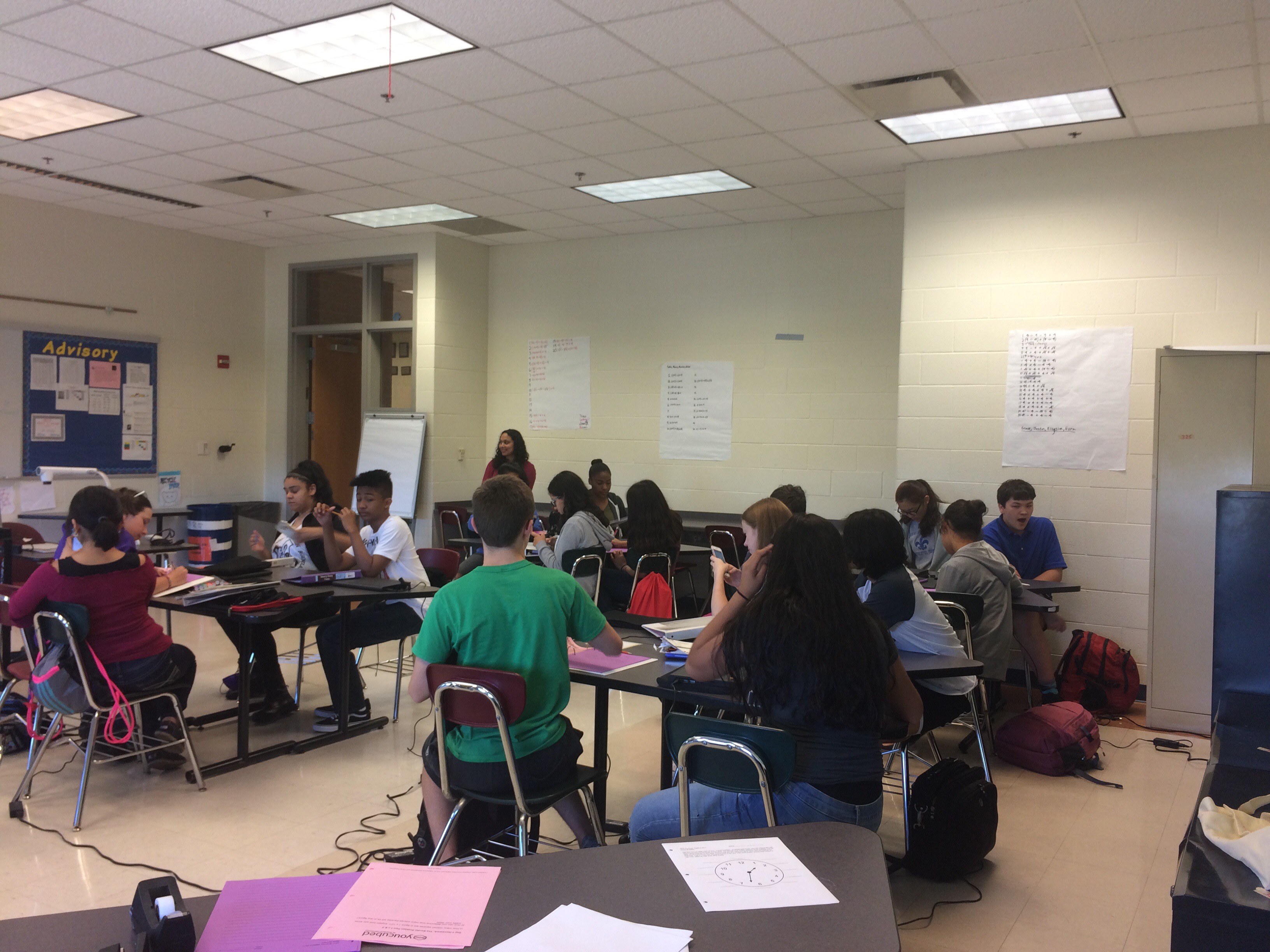
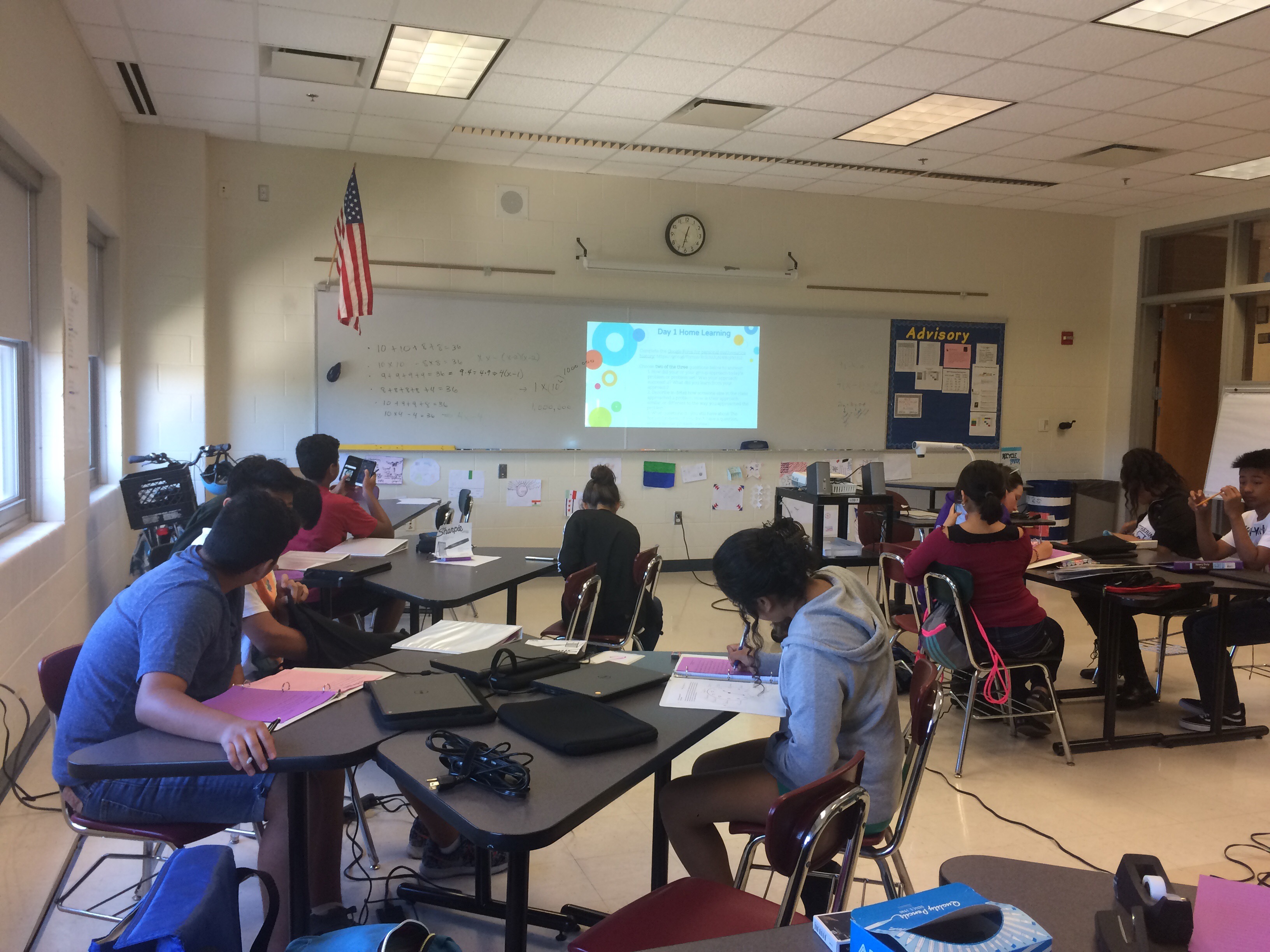
As much as I wanted to keep Desmos-ing to reinforce what I learned over the weekend, I didn’t have that luxury. After the extended weekend at Desmos, I was back at Northside for Summer of Algebra. We had to deal with some flux in the enrollment, and we had some students joining us late, but we made the most of it. We had 31 students whom we would say completed the program. We have made our recommendations for their course placement in the fall. We recommended that two of the students take Algebra in the fall. We felt that these four weeks were not enough for them to really be solid with the content. I spoke with one of the students before he left on the last day and explained to him why we want him to take Algebra. He said that he was disappointed, but he understood why I was making that recommendation. He also explained that most of the material that we learned this summer was new to him and he sensed that it wasn’t new for other students. He was right. Another handful of students we recommended for Geometry, but we had some reservations about them and we let them know it. In the email to them, I said that we expected them to go to Math Tables at Northside regularly so that they could be as successful as possible. It was interesting to me and my co-teacher that it was much more difficult to make these recommendations this year. The students were always surprising us. Some days, they seemed really solid with the material and other days, they didn’t. Some of them wanted to exude confidence, but they didn’t always have the mastery to back up that confidence. Pretty much all of the students said in their self-reflections that they were ready to move on to Geometry, so that didn’t make our recommendations any easier. Except for the two students who are going to take Algebra, we erred on the side of allowing the students to progress, with the caveat that they have to stay committed to their learning in the coming years.
I learned a great deal about teaching through this Summer of Algebra experience. I honed my capacity to be as clear as possible in articulating learning objectives and teaching moves. I realize that there is so much that I know about teaching that I don’t often get the chance to articulate – perhaps if I blogged more I would? I learned how difficult it is to write plans that other teachers had to understand. In the moment of teaching, I know how to launch a lesson, how to ask questions as students explore the task, how to monitor what they are doing and that to look for as they do it. I know how to weave in related ideas based on what students are saying and doing. I know how to get students talking to each other and to me when they are feeling confused about the material. I know how to ask students to share their ideas in their groups and with the whole class. It was extremely difficult for me to tell other teachers – through text – how to do those same things, or close approximations of those things. It’s one thing to have a lesson plan that I will implement. It’s another thing to have four weeks of lessons plans that eight other teachers will be implementing. I can’t say that I’m an expert at it now, but I did grow in that way. It’s forced me to think more deeply about all the choices I make as a teacher and to something think, “How would I explain what I’m doing to a teacher who has never done this before?”
Because I was co-teaching, I had the opportunity to *really* listed to another teacher while she was teaching. It forced me to reflect even more on what I say when I’m teaching and how I say it. I was *listening* to myself talk and teach more than I usually do. I noticed a few things. I noticed how easy it is to fall into the habit of saying “right?” after making a statement. It sort of turns the statement into a fake question where the listener has no choice but to agree. “This is the rate of change, right?” or “Divide both sides by 7, right?” Whether it was me or my co-teacher, I listened for this and noticed that students would subconsciously nod their heads in agreement. Of course they are supposed to agree, the teacher just said it was ‘right’! It can be almost trance-like to follow along with a teacher who keeps saying “right” at the end of a statement. When I realized I was doing it, I avoided it as much as I could because I noticed that it kills real discourse and students just tend to zone out. Instead of saying a statement like that I would either say nothing or ask a real question that students could answer.
Speaking of asking questions, I also decided that I don’t like to ask “Why?” when I follow up with a student. Of course, I still want their explanations and for them to develop their thinking more. But, I’ve decided that asking “why?” is another coded way of asking students to give me the correct answer, instead of them really explaining themselves in their own way. Students have a sense that there is a correct way to answer a ‘why?’ question when it comes from a teacher and they may not feel like they have the correct reason for an answer. As a result, they sometimes answer with “I don’t know” or “because that’s the correct answer” or something else that doesn’t really explain how they came to a certain response. Asking “why” sometimes feels like an attack, too. Students can feel like it’s an affront to what they just came up with. It can come off as a little too forceful to some students who have a more reserved nature. Also, in outside-of-classroom life when someone says “Don’t ask me why I just…” it usually means that they don’t want to tell you the reason, that you wouldn’t like or approve of the reason, or that they are embarrassed with the reason that the person did the thing they are talking about. And, since I’m a mom and I ask my own kids ‘why’ questions when I don’t really want to know the reason (“Why did you leave your cereal bowl on the kitchen table?” and “Why did you just smack your sister?”) it seems like asking ‘why’ is another way of expressing disbelief or exasperation at someone’s actions. Answering a “why?” in the classroom gets to feel perfunctory.
In addition to avoiding this fake inquiry in my personal life, I’m going to keep avoiding asking ‘why’ in my classroom, too. Instead of asking “why?” I tried to say, “Keep talking about that idea” or “Anything else you want to say about that?” or “Keep going…” or “OK, thanks, and?” or “I think I’m following. Ca you go on?” I’m sure that there are other replacements, I just can’t think of them now. As I wrote up above, I know these kinds of responses I can make in the moment of teaching, I just can’t articulate them when I am not teaching.
So now that I have these thoughts down, I have to figure out a way to get online and post them to my blog while we are almost wifi-free and LTE-free here at Lake Crescent Lodge in Olympic National Park. This brain dump may either free up some of my personal RAM so I can enjoy my vacation more or I’ll worry that I didn’t get all of it out when my family and I take our hikes through these gorgeous grounds. Whether I’m set free or set up for more reflection, this will likely be my last post for a while. Perhaps I’ll check back in when I have more replacements for the classroom “why?” question. Now, why would I do that?

















 Necessary But Insufficient